Festive Windows and Frosted Stone: A Halifax Shopfront Walk for 2026
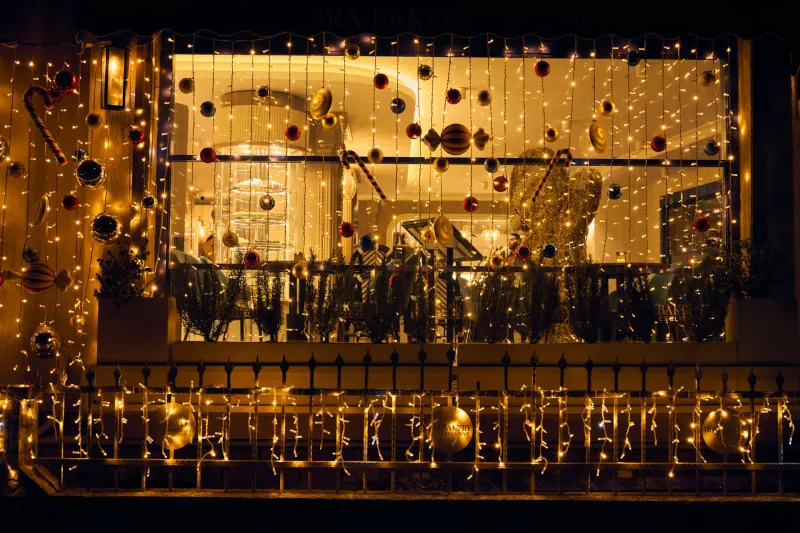
Halifax in late November has a particular look about it. The sky sits low over Beacon Hill, the pavements never quite dry out, and by half past three the shop windows are doing most of the lighting. For a few weeks each winter the town centre turns into something close to a free exhibition, and the best way to see it is on foot, at a slow pace, with a stop for a brew somewhere in the middle.
This is our suggested wander for 2026 — a route that begins at our door, loops through the older streets, takes in the Piece Hall and the market, and finishes on the run down towards North Bridge. It's about a mile and a half. At browsing speed, allow ninety minutes to two hours.
Why shopfronts, and not just the big lights
Christmas displays in a town like ours aren't the same beast as the installations you'll find in a city centre. They're made by people who know their regulars by name, often out of things that have been in the stockroom since October. One window will be a careful arrangement of wool and ceramics; the next will be a single wooden reindeer that's been doing the same job since the nineties and has become weirdly beloved.
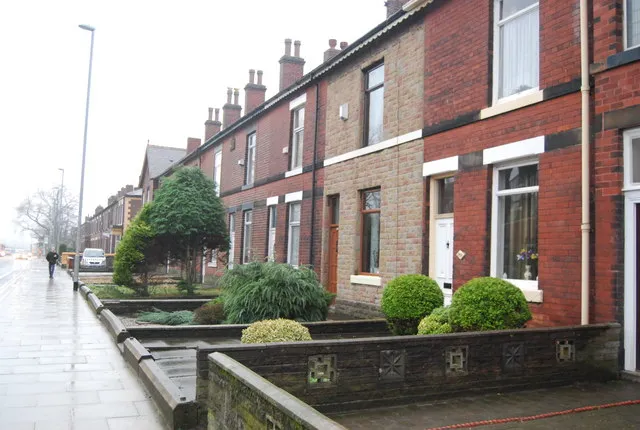
That's the appeal. A high street dressed by the people who trade on it has a texture you can't manufacture, and it sits against two or three hundred years of building that was never designed to be looked at — only lived and worked in.
The route, roughly
Start at Conway's. From there, head into the town centre proper, take in the older shopping streets, climb towards the Piece Hall, drop down through the market, and finish with the lower end of town. If you're arriving by train, the walk works just as well in reverse — the station is a short, if uphill, walk from the bottom of town, and the bus station puts you within a couple of minutes of the middle of the route.
Stop one: the independent windows
The first stretch is the easiest and the most rewarding for browsing. Look at how each shopfront frames its display: the painted timber fascias, the pilasters either side of the door, the little console brackets that hold the fascia up. Some of these are original Victorian and Edwardian work; others are sympathetic later replacements. Either way, they were built to a common grammar, and that's why a row of very different businesses still reads as a single street.
Take your time here. This is also the best stretch for actual shopping, and the windows are the point — a display you can see from the pavement is usually a sign of a shopkeeper who wants you to come in.
Stop two: the climb
The older streets running up towards the top of town are steep, and surfaced in a mix of flagstone and setts. Wear something with a decent sole, and if you're pushing a pram or using a wheelchair, plan this section with a companion or pick the gentler parallel route, because gradients here are honest and the crossovers between pavement levels aren't always generous.
What you get in return is the architecture. Notice the soot-darkened stone, the carved lintels over former doorways, the upper floors where window sizes shrink as you go up — a dead giveaway of a building that grew a storey when the trade downstairs was doing well.
Stop three: the courtyard
The Piece Hall is the obvious set piece, and in December it earns the fuss. The courtyard is cobbled, which looks wonderful and is unforgiving in heels or on a wet day; there are step-free entrances and lifts to the upper galleries, plus plenty of seating once you're inside. The independent units around the colonnades tend to go properly festive for the season.
Look up while you're there. The gallery fronts, the ironwork, the rhythm of the arches — it's the clearest lesson in Halifax's built character you'll get in one view.
Stop four: the market and the lower town
From the courtyard, drop down towards the market. Covered, warm, and reliably busy in December, it's the natural halfway stop for something hot. The butchers, bakers and delis here are the practical heart of a local Christmas shop, and buying a hamper from three stalls rather than one supermarket is a small act of civic loyalty that pays back all year.
Finish downhill, where the streets narrow and the buildings get older and more patched-about. This is where you'll spot the best small details: a ghost sign under later paint, a stone mullion reused in a modern shopfront, a datestone above a lintel.
Practical notes for 2026
- Timing. Go early evening if you want the lights to matter, or mid-morning if you want the pavements to yourself. Several independents open later on Thursdays and Fridays through December, but hours vary wildly — check before making a special trip.
- Access. The town centre is hilly. The Piece Hall, the market and most larger shops are step-free; smaller independents often have a single shallow step at the door and are usually happy to help if you knock.
- Weather. Assume rain. Assume it again. The route is designed so you're never more than a few minutes from cover.
- Money. Small shops, small margins. Cash is welcome more often than you'd think, and a card machine isn't a guarantee.
- Bags. Bring your own. It's the Calder Valley way.
A last thought
A high street in December is a fairly honest measure of a town. Ours is imperfect — there are empty units, and some windows are better dressed than others — but it's alive, it's local, and it's walkable in an afternoon. Pull on a coat, start at our door, and see what the town has made of itself this year.