Stone, Sash and Salvage: How Calderdale's Mill Past Still Shapes Halifax Interiors
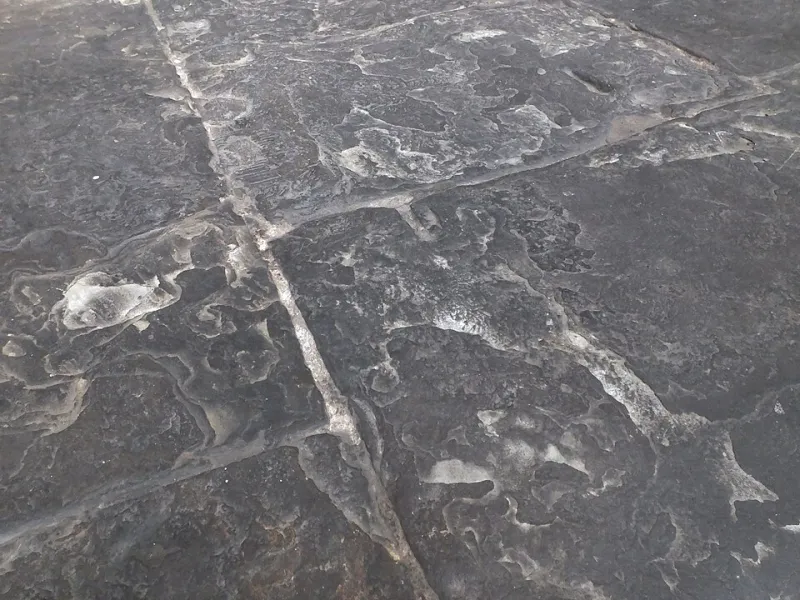
Photo: Clem Rutter, Rochester, Kent, CC BY-SA 3.0, via Wikimedia Commons
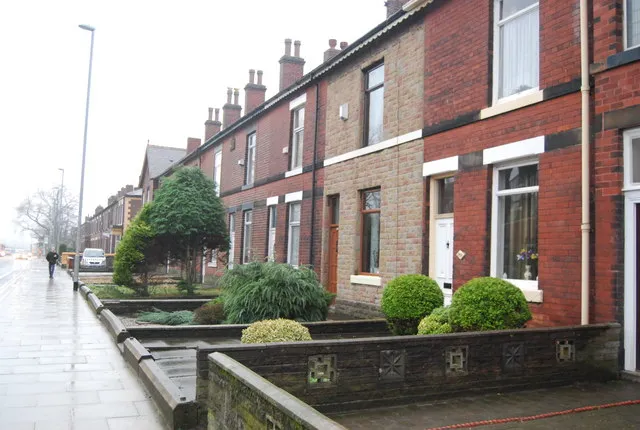
Walk up any of the streets that climb out of the town centre and you're walking through a workshop. The houses on the terraces were built for mill workers and overlook buildings that once ran night and day. The stone came out of the hillside a few hundred yards away. The proportions were set by what a builder could span with local timber. Even the light in a Halifax front room is a product of the textile trade — those tall sash windows were designed to let in the maximum usable daylight, because daylight was once an industrial requirement, not a lifestyle preference.
That inheritance is why Halifax interiors feel the way they do. It's also why so many renovation decisions here come down to a single question: are you working with the grain of the building, or against it?
The floor tells you what the house expects
Stone flags are the great giveaway. Where they survive in a hallway or a kitchen, they're usually uneven, cold and utterly irreplaceable — and the instinct to cover them with engineered oak is understandable but frequently regretted. Flags breathe. They take knocks. They look better with age and worse with sealant.
Where flags have gone, the honest options are to lay reclaimed stone (expensive, beautiful, hard to match), or to choose a floor that doesn't pretend. Nothing looks quite as sad as a modern tile printed with a stone pattern sitting next to genuine 19th-century stonework.
Sash windows: repair, don't replace
No element of a Halifax home divides opinion more. Victorian and Edwardian sashes are, when maintained, superb: they ventilate properly, they suit the elevation, and the slim glazing bars are impossible to replicate convincingly in uPVC.
"Nine times out of ten the frame is sound and it's the cords, weights and paint that have failed," says one Sowerby Bridge joiner who has spent three decades on valley sashes. "People replace a hundred-year-old window with something guaranteed for twenty-five years and call it an upgrade. I'd call it a downgrade with a warranty."
Where heat loss is the real concern, secondary glazing and draught-proofing usually deliver most of the benefit at a fraction of the cost — and both are reversible. That word matters. Reversible changes are the friend of an old house.
Mill fittings and the salvage instinct
The most distinctive thread in Calderdale interiors right now is the reuse of industrial furniture. A cast-iron base from a textile machine becomes a kitchen island. A pattern-room table, scarred and stained, becomes a dining table that would cost a fortune to fake. Wooden bobbins turn up as coat hooks; a mill cart becomes a coffee table; slate roofing from a demolished shed becomes a hearth.
"People want something with a bit of grit to it," a Hebden Bridge furniture maker told us. "They've had enough grey. What they're actually after is a piece that couldn't have come from a showroom."
There's a caveat worth stating plainly: salvaged industrial pieces are heavy, often awkward, and occasionally structural. Measure the doorway before you fall in love. And be wary of anything described as 'mill salvage' that looks suspiciously uniform — there is a healthy trade in new furniture styled to look old.
What 'heritage-inspired' actually means in 2026
A decade ago, the phrase usually meant reproduction Victorian: ornate cornices, fussy fireplaces, fake shutters. That's mostly gone. The current reading is quieter and more confident — the building's own materials used well, plus a small number of pieces with real age, plus modern furniture that doesn't compete.
In practice, that tends to look like: original stone exposed rather than hidden, joinery painted in a soft off-white or a deep earth colour, floors left as they are, one or two genuinely old objects doing the talking, and lighting that flatters lime plaster rather than interrogating it.
Three ways to nod to history without curating a museum
Decide what's actually original. Before you change anything, find out what you have. Cast-iron fireplaces, moulded cornices, four-panel doors, stone surrounds, original stair spindles — these are the things that make the house legible as a Halifax house. Protect them and spend your budget elsewhere.
Let one thing be old. A single beautiful survivor — a flag floor, a battered chest, a longcase clock, a scarred workbench in the kitchen — reads as character. Six of them read as a themed café.
Choose honest modern. A plain oak table, a simple steel pendant, a decent wool rug. New things that don't pretend to be anything else sit comfortably alongside old fabric. It's the imitation that jars.
Where to look, and what to ask
Reclamation yards around the Calder valley are the obvious starting point, but the best finds still come through local auction houses, house clearance sales and the small ads. Ask about provenance and expect a shrug — much of it is genuinely unknown. Ask about dimensions and take a tape measure.
Most of all, ask your builder what they think before you start. The tradespeople who work on these houses every week have seen every mistake twice and know which walls breathe, which floors move and which windows are worth saving.
Halifax homes were built by people who made things for a living, in a valley that supplied the materials. Treating the fabric of those houses with a bit of respect isn't nostalgia. It's just good manners — and, as it happens, the most reliable route to an interior that feels like it belongs here.