Boundaries That Speak: Caring for Halifax's Garden Walls, Posts and Steps
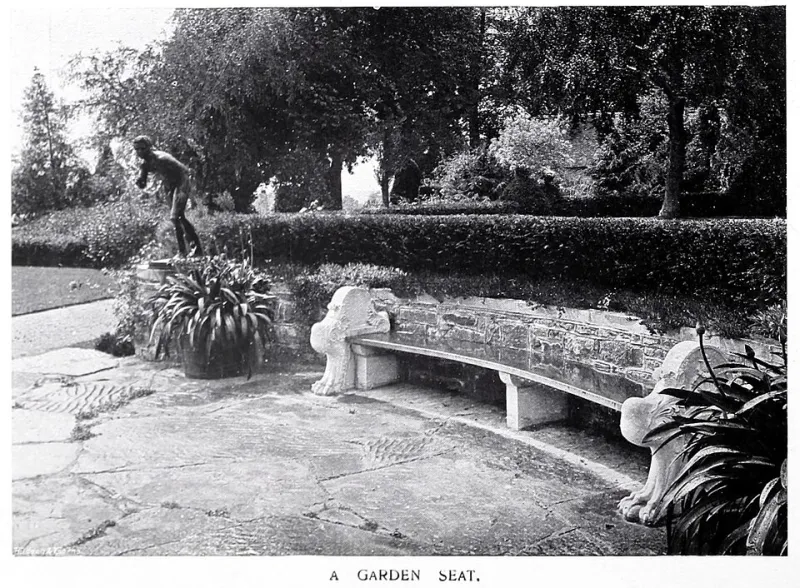
Photo: Charles Latham (1847–1912), Public domain, via Wikimedia Commons
Walk down almost any Halifax street and you'll pass a dozen quiet boundaries before you reach the shops. A low gritstone wall, a gatepost with a worn cap, two steps up to a front garden — these are the details that frame a home long before the front door comes into view. They're easy to overlook, especially when the roof and windows are asking for attention. But boundary stonework has plenty to tell us, and after another wet Calderdale winter, it's worth a closer look.
What the stones remember
The stone at the edge of a Halifax property is often local gritstone, and its character changes from street to street. Look at the coursing: older walls tend to have irregular blocks, maybe dressed by hand, with a slight taper or a rougher face. Later Victorian and Edwardian boundaries are often more regular, but still carry tooling marks that tell you someone shaped that stone rather than ordering it from a catalogue.
Gateposts are even more revealing. A chamfered edge, a simple ball finial, a square cap with a drip groove — these are small architectural decisions that date a boundary and tie it to the house behind it. Steps are just as honest. If the middle of a stone step is worn into a shallow dip, that's decades of foot traffic, not a manufacturing fault. Kerbstones and edging tell a similar story, especially where they've been patched or replaced over time.
The mortar matters too. Many older walls around Halifax were built with lime mortar, which is softer and more breathable than modern cement. If you see wide, creamy joints that have weathered back slightly, that's a clue to the wall's age — and a warning not to repoint it with a hard cement mix that can trap moisture and damage the stone.
The 2026 winter watchlist
After the frosts and wet spells we've had, boundary stonework deserves a slow walk around the outside of the house. Start with the walls. Are any sections bulging or leaning? Is the coping — the top layer of stone — still firmly bedded, or has it lifted? Loose caps let water in, and once water gets behind a wall and freezes, the damage accelerates.
Check the joints. Crumbling mortar isn't always an emergency, but deep, sandy erosion or joints that have gone soft and hollow are signs that repointing is due. Look out for spalling, where the face of a stone has flaked away. That often happens when trapped moisture expands in a freeze, and it's common on older gateposts with cement repairs.
Gateposts are the most vulnerable part of many boundaries. A post that has started to lean may simply have been nudged by a vehicle, but it can also be a sign that its footing is waterlogged or that the post is no longer connected properly to the wall. Give it a gentle push — not a shove — and see if there's movement at the base. If there is, don't ignore it. A leaning post is a safety issue as well as a visual one, especially beside a pavement or drive.
Steps need a mention too. Worn treads, loose nosings and cracked stone can become trip hazards once the wet weather sets in. Clear moss and leaves from the treads, check handrails if you have them, and look for any stone that rocks underfoot. Small amounts of green growth on a wall are usually harmless, but a thick carpet of moss can hold moisture against the stone and make steps slippery.
Quick checks, careful fixes
There are a few sensible jobs a homeowner can do without calling anyone out. Clear leaves and debris from the base of walls and from drainage channels. Check that downpipes aren't discharging straight onto stonework. Remove any loose ivy or woody growth that's prying joints apart — but leave established, well-behaved planting alone if it isn't causing movement. And resist the urge to pressure-wash old stone; it can strip the surface and force water into places it shouldn't go.
If a joint has failed and you're confident the wall is otherwise sound, a small lime-based repair can be done carefully. But this is where many quick fixes go wrong. Cement pointing on a soft old wall looks tidy for a season and then causes problems, because it's harder than the stone and traps moisture. The same goes for patching a gatepost with modern resin or cement without understanding why it moved in the first place.
When a mason is the right call
A leaning gatepost, a bulging wall, a cracked step that moves underfoot, or deep, widespread mortar failure all deserve a proper look. These aren't jobs for a general handyman with a bag of cement. A mason who works with traditional stone will assess the cause — drainage, footing, movement, failed repairs — and match the repair to the wall. That matters in Halifax, where the local stone and the local weather both have strong opinions.
Heritage boundaries also need a sensitive approach. If your home is in a conservation area, or the wall is original to the property, repairs should preserve the character of the stonework rather than replace it with something that looks too new. A good mason will reuse stone where possible, source compatible material where not, and use a mortar that lets the wall breathe.
A boundary worth keeping
The walls, posts and steps around a Halifax home are part of its story. They've stood through plenty of winters before this one, and with the right care they'll stand through plenty more. A few minutes of checking now can save a much bigger repair later — and it keeps the street looking like the place you know.
If you're unsure whether a lean is serious or a joint just needs attention, ask someone who knows stone. It's the same advice we'd give for any part of an older home: look closely, repair honestly, and don't rush the bits that hold everything together.